3 May 2026

Japan Brings a Seaplane to the South China Sea Group Chat
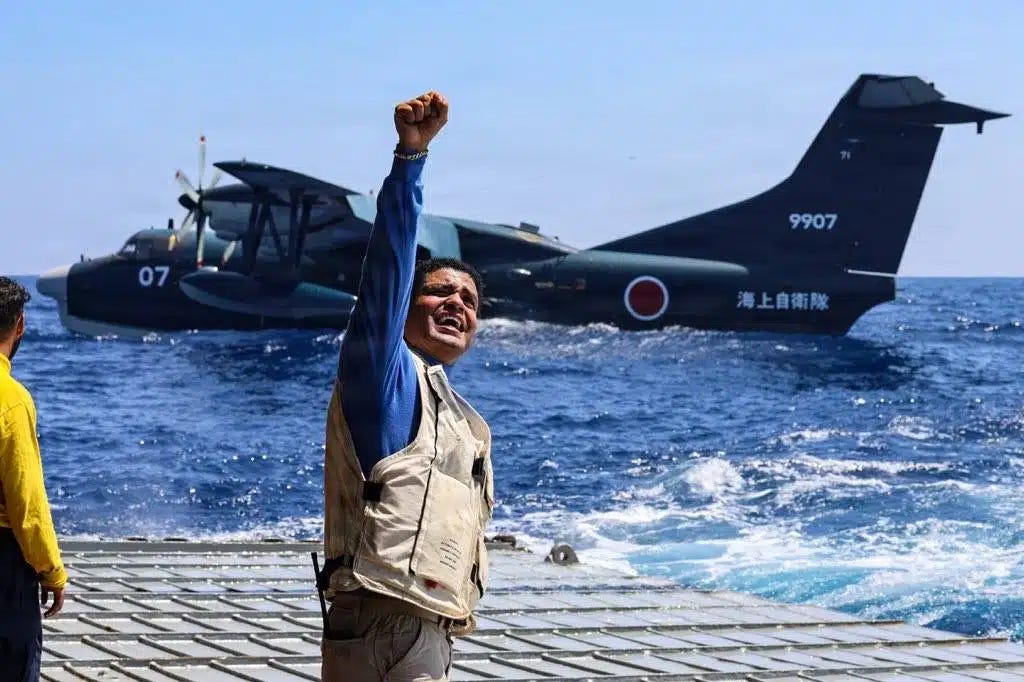
Japan’s growing role in the South China Sea comes down to a shared concern in Manila, Washington and Tokyo: China keeps making the neighborhood weird, and someone has to be the adult with the most amphibious aircraft.
Tokyo sent its ShinMaywa US-2 to this year’s Balikatan exercises—a casualty-evacuation drill with the USS Ashland, practice for the kind of maritime emergency everyone would strongly prefer to keep theoretical. The US-2 is a large aircraft. It does not sneak up on anyone. Its presence is less “subtle diplomatic signal” and more “we rented a billboard.”
Balikatan 2026 is the biggest yet, with 17,000 troops including 1,400 from Japan, plus warships, C-130Hs, and Type 88 missiles—which is one way to RSVP.
Chinese Money Discovers Singapore Has Rules—and Is Into It
Chinese capital is flooding into Singapore’s property market, apparently because nothing soothes a nervous investor like a country where the trains run on time and chewing gum is a controlled substance.
Mainland Chinese firms went from 2.5% to 21% of Singapore’s fixed-asset investment in a single year — a leap that analysts attribute to “safe haven” appeal and that everyone else attributes to watching the rest of the world catch fire.
Chinese developers with local experience are reportedly “comfortable with Singapore’s rules” — a sentence that would have sounded absurd five years ago and now just sounds like a real estate strategy.
In short: Chinese capital has found a property market where the paperwork is genuinely frightening, the regulations are merciless, and apparently that’s the whole appeal.
Greece Eyes Hormuz—After Everyone Stops Shooting
Greece is weighing a possible naval role in the Strait of Hormuz, where China, the U.S. and anyone fond of oil arriving on time all have a direct interest in keeping ships moving.
But Athens has a condition: no combat mission, no offensive operation, and ideally no “welcome aboard, World War III starts in 10 minutes” situation. Greece says it would only help secure Hormuz after a ceasefire.
That caution makes sense. Greece’s merchant fleet is heavily exposed to Gulf routes, and officials have warned that disruption—or any toll system in Hormuz—would threaten freedom of navigation and set a dangerous precedent. For a country whose business model is basically “please let the boats keep boating,” this is not a small concern.
China Tells Africa: We’re Begging You, Please Buy Less of Our Stuff
China has flung open its market to African imports, granting tariff-free access to 53 of Africa’s 54 countries in a move Beijing describes as generosity and economists describe as “trying to fix an embarrassing spreadsheet.”
Everyone gets in except Eswatini—a landlocked kingdom the size of a parking lot that recognizes Taiwan and has therefore been left to contemplate its choices.
Beijing is particularly excited about cocoa, coffee, avocados, citrus, and wine—a shopping list that reads less like trade policy and more like a brunch order. This makes more sense once you see the numbers: China-Africa trade hit $348 billion in 2025, with China responsible for the overwhelming majority of the “selling” column.
The gap is so lopsided that China’s new policy is essentially a politely worded invoice correction: “Wonderful continent. Love the relationship. Any chance you could, perhaps, send some things back?”
House Democrats Ask Trump to Keep the Chinese EV Goblin Outside
More than 70 House Democrats are urging President Trump to keep Chinese automakers out of the U.S., warning that Beijing’s subsidized car industry could hit American jobs, manufacturing and national security with the quiet menace of a very cheap electric sedan.
The appeal comes ahead of Trump’s expected meeting with Xi Jinping in Beijing, because nothing says “high-level diplomacy” like bipartisan fear that BYD might eat Detroit’s lunch and ask for dessert.
Lawmakers want to keep Biden-era restrictions that effectively bar Chinese-connected vehicles from the U.S. and close back doors through Mexico and Canada.
The takeaway: Washington may agree on almost nothing, but it can still unite around one message to Chinese EVs: nice car, please remain across the Pacific.
More posts on Monday!